
As well as providing fun memories and family bonding experiences, the use of games can enable parents to encourage play-based learning in kids.
What is play-based learning?
Play-based learning is the development of children’s skills and abilities through play. One of the ways in which it can be facilitated is through the use of tabletop games, such as board and card games. Using games is a popular way of enabling learning through play at home within the homeschool community and forms the basis of the practice of gameschooling, However, it can be done by any family to support and complement children’s education.
Why do games help with learning?
Children are more likely to engage and therefore more likely to learn when they enjoy the learning process. This is why games that are fun to play but that also help towards children’s development can be such useful tools for parents to use. Moreover, as they don’t feel like study, they can also prevent kids from feeling too much pressure.
How to choose which games to play
Children’s games can be chosen according to kids’ ages and abilities. Some games have a wider player age range, making them great for mixed age groups of children, whereas others are tailored to a more specific age range. Some can even be adapted according to the ages and abilities of players. For example, parents can adapt the playing experience of our List Property Printable Game by choosing different list cards to use (click HERE for the US version of this game and HERE for the UK version).
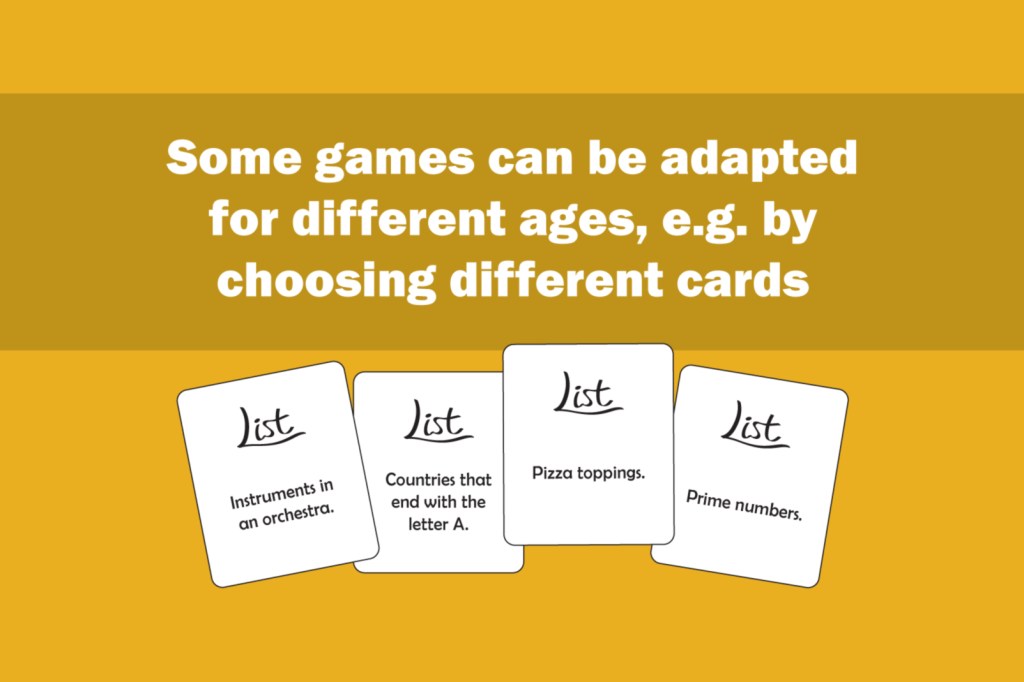
Games can also be chosen according to the different topics that they explore. For example, a game in which players have to navigate around a map of Europe is a great way of familiarising children with European geography and capitals.
Another aspect to consider when choosing games to teach kids is what skills they develop. Games can develop a wide range of skills in a wide range of ages, from fine motor skills in young children to an advanced use of logic in older children. They can also help with maths skills such as counting and subitising and English skills such as spelling and vocabulary. Games that involve matching can help young kids with visual literacy and picture recognition and those that involve working as a team can help kids with social skills such as the ability to work cooperatively.
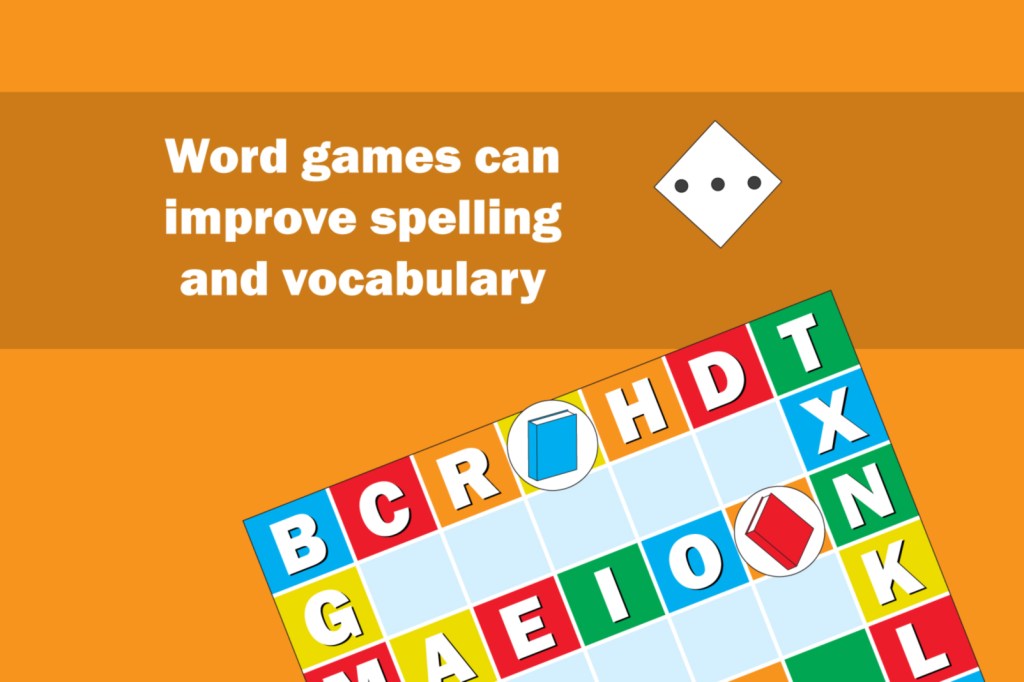
The number of players is also an aspect that needs to be considered by parents. Some games are designed for large groups, some for fewer players and even solo use and others can be adapted for different player counts.
How can games be incorporated?
Games can be incorporated in many ways by different families. Here are just some suggestions:
- Use them in spare time when travelling, during screen-free time, on rainy days or in the holidays.
- Use them as back to school activities to get kids ready for returning to school before term starts.
- If you are a homeschooler, teach kids using games in order to start off a new year or term of homeschool in a fun and less pressured way.
- Again, if you are a homeschooler, have a game day (or whatever period of time works for you) in your homeschool week that kids can look forward to.
- Use games to break up periods of intense study, whether after school or in homeschool.
- Take kids along to games clubs or events in church halls, cafés and libraries or host a club or games night at home.
To explore any of the games that we provide at Many Joyful Things, check out our Made For You Games range for ages 7+ (click HERE) and our Edmund and Joy range, which has games for ages 3-6 (click HERE).
For more ideas like these, subscribe to our blog and follow us on social media.
Disclaimer: Many Joyful Things makes no representations or warranties of any kind in relation to the information in this post.

