
Code breaking activities can develop children’s use of logic, problem-solving skills, vocabulary and general knowledge. They can be used to introduce kids to famous codes that have been used in historical contexts as well as showing them further ways in which words and phrases can be coded and decoded and they can even prompt them to get creative and think of their own codes.
These activities can cover a broad range of topics such as English, history, mathematics and science through having different themes or through using aspects of these subjects in the codes and in the answers.
In addition to being educational tools that can be used in homeschool or school, code breaking activities are a lot of fun and provide a great sense of satisfaction when words and phrases are deciphered correctly.
Our newest release ‘Password Club Code Breakers Printable Activity Book 1’ features various different code breaking activities and is part of our Joel and Hope’s Password Club range for 7-12-year-olds, which invites kids to crack passwords and solve mysteries.
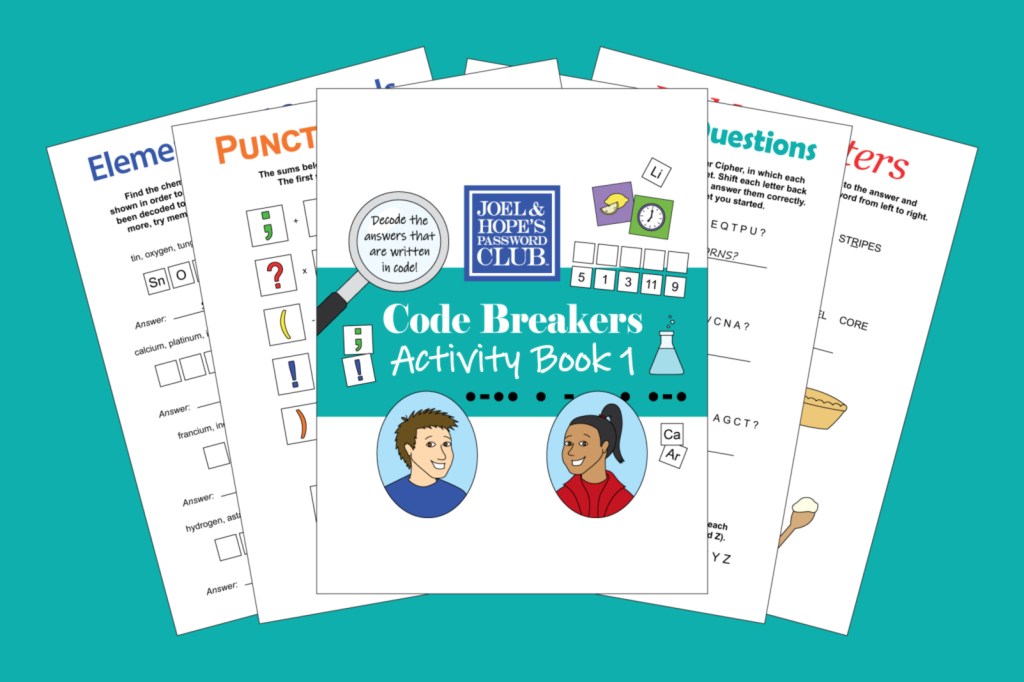
Inside this printable resource is a mix of classic codes and newer codes, with words, phrases, questions and sums to decipher.
One of the classic codes that features in the book is Morse Code, in which letters of the alphabet are represented by dots and dashes. This code was invented in the early 1800s and has been used historically in telegrams and during the World Wars, making it a great code for children to learn to accompany their learning about wartime history.
Another classic code that features is the Caesar Cipher, in which letters are shifted by a certain number of places in the alphabet. This cipher was used historically by Caesar to code sensitive messages, making it a great accompaniment to children’s learning about Ancient Rome.
Another code that features in this book is the Rebus Riddle, in which pictures are clues to words or phrases. This code is great for visual learners who find visual information such as picture clues engaging.
This activity book also gives kids the opportunity to learn about various chemical elements and symbols by finding the corresponding chemical symbols for each of the chemical elements shown. For older children or children who have existing knowledge of the periodic table, this activity can be made more challenging by memorising the listed chemical elements and symbols before completing the activity.
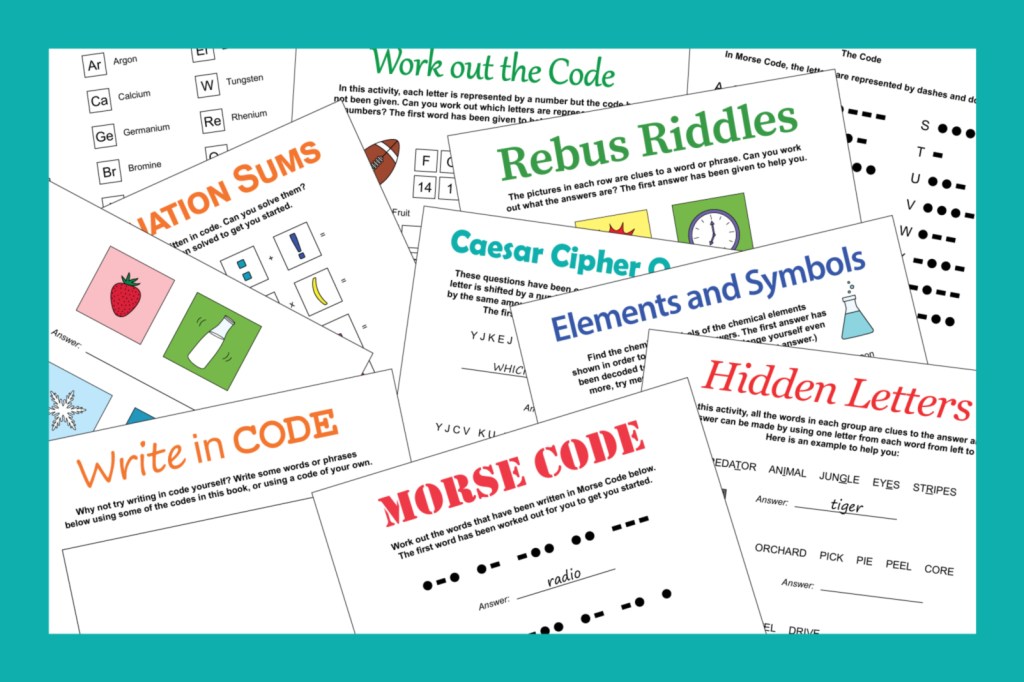
At the end of this activity book, kids are prompted to write in code, whether they use codes from the book or new codes of their own. We hope that this resource will inspire them to get into code breaking and to enjoy learning!
For the USA version of this activity book click HERE. For the UK version click HERE.
Disclaimer: Many Joyful Things makes no representations or warranties of any kind in relation to the information in this post.
 Many Joyful Things